🚚 توصيل مجاني للطلبات فوق 299 ريال سعودي* | باستثناء المنتجات الثقيلة
سياسة ملفات تعريف الارتباط
أوافق على معالجة بياناتي وفقًا للشروط المنصوص عليها في سياسة الخصوصية.Cart
Your cart is empty
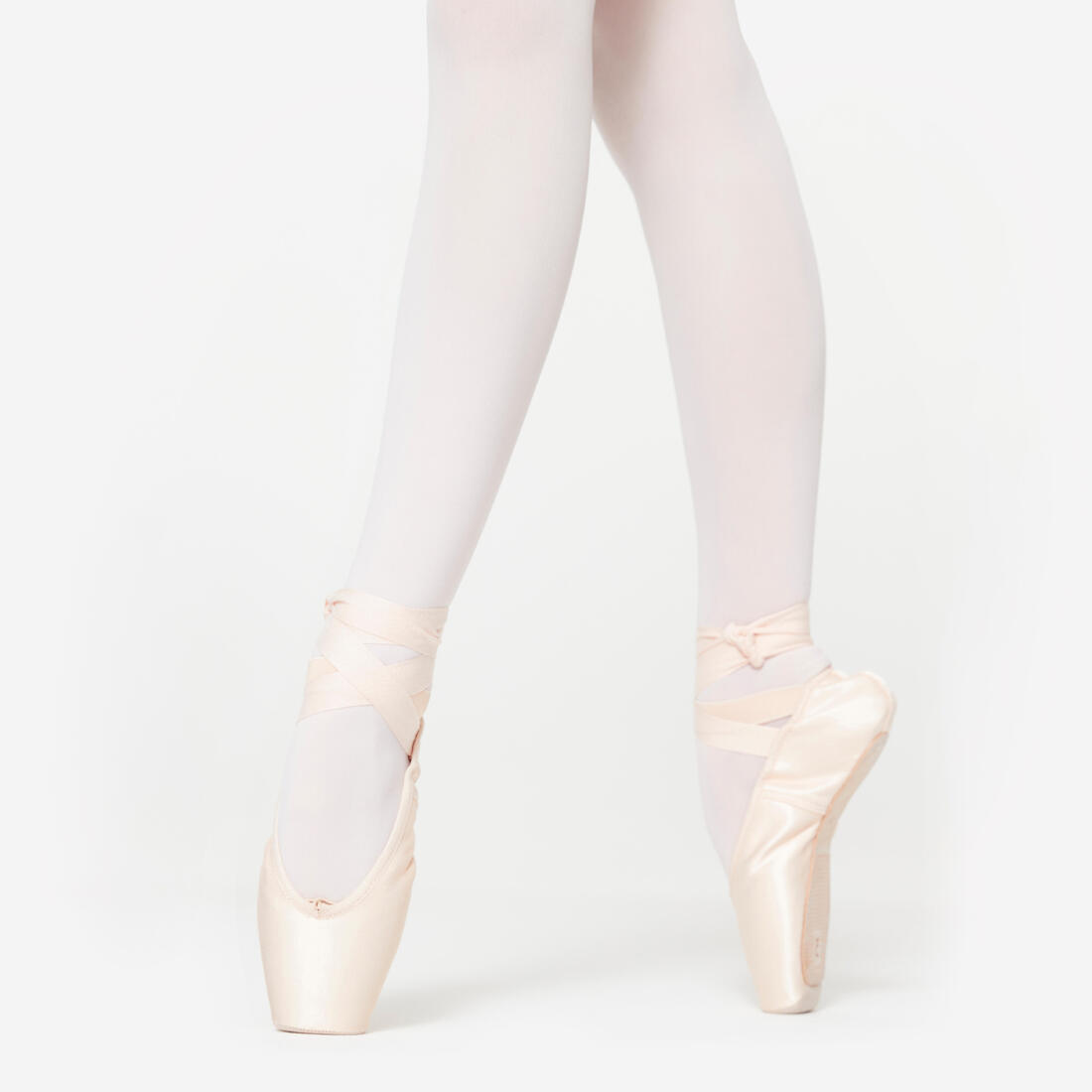
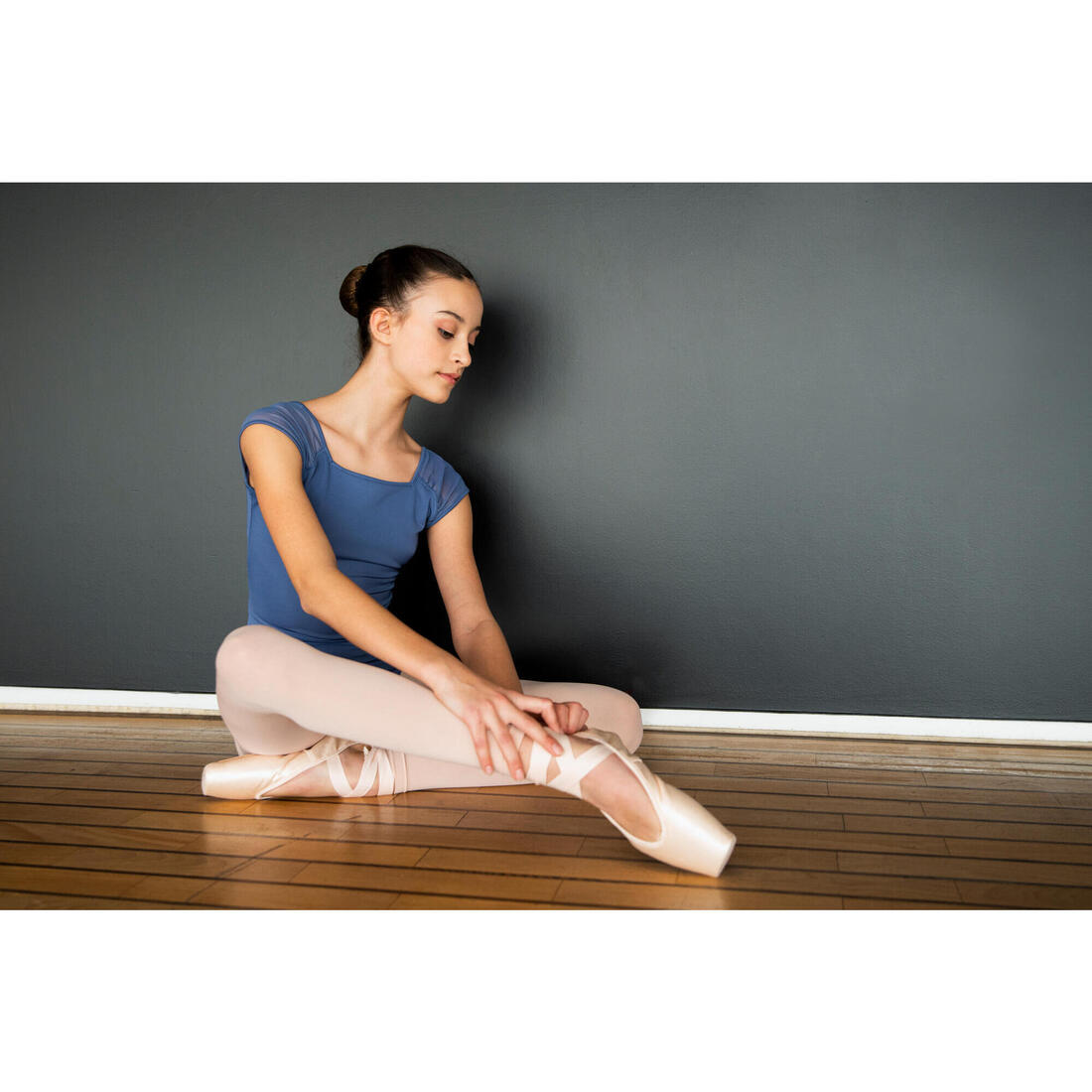
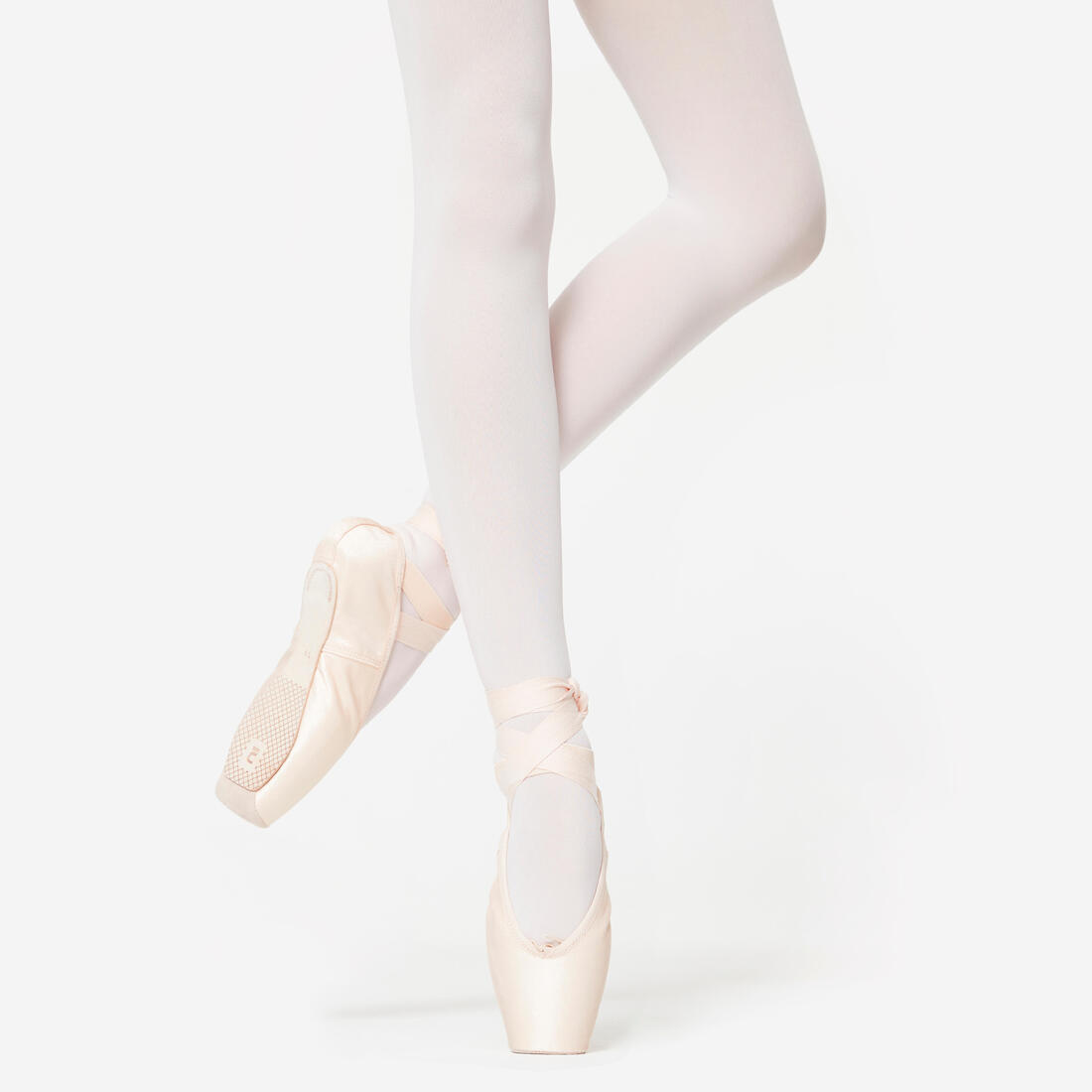
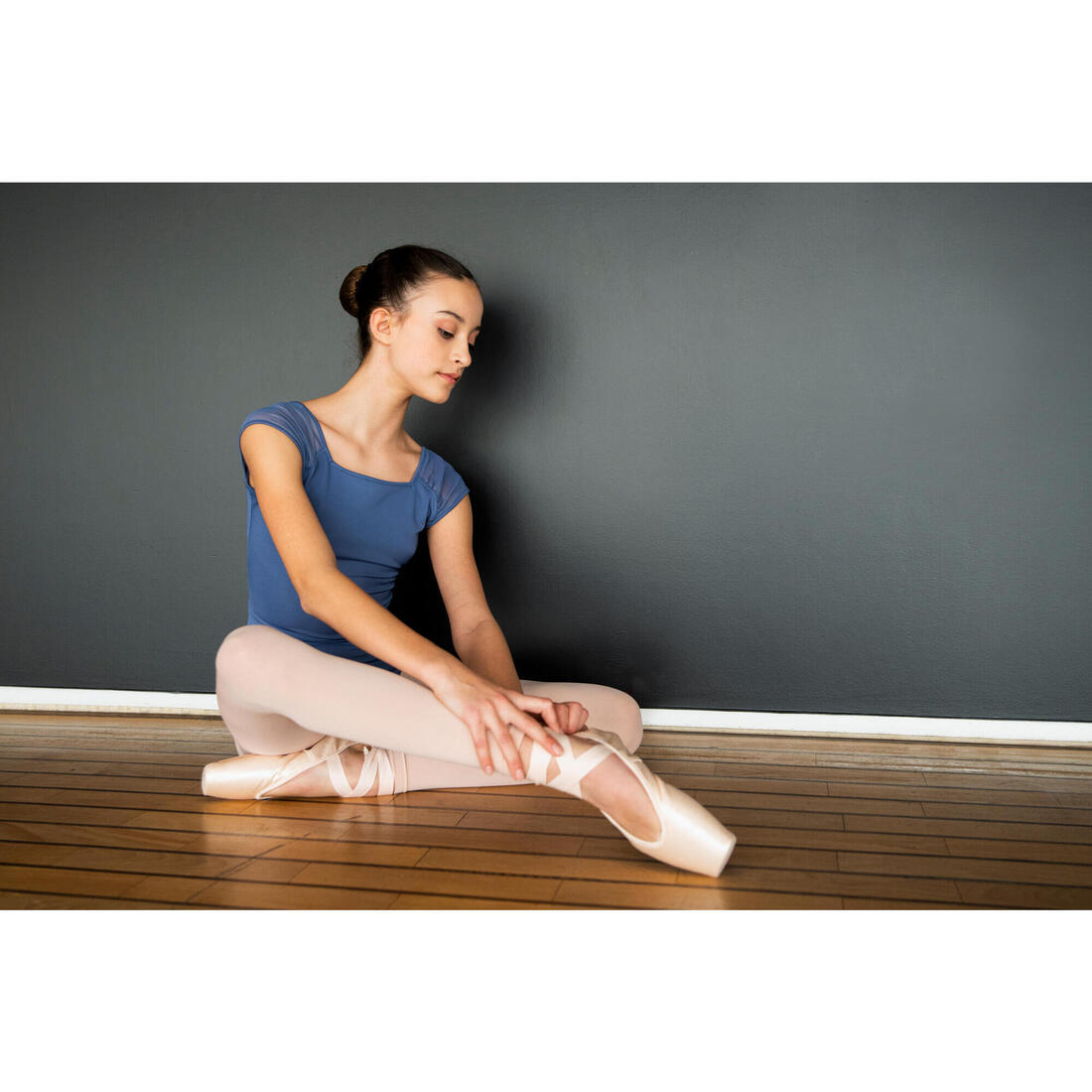
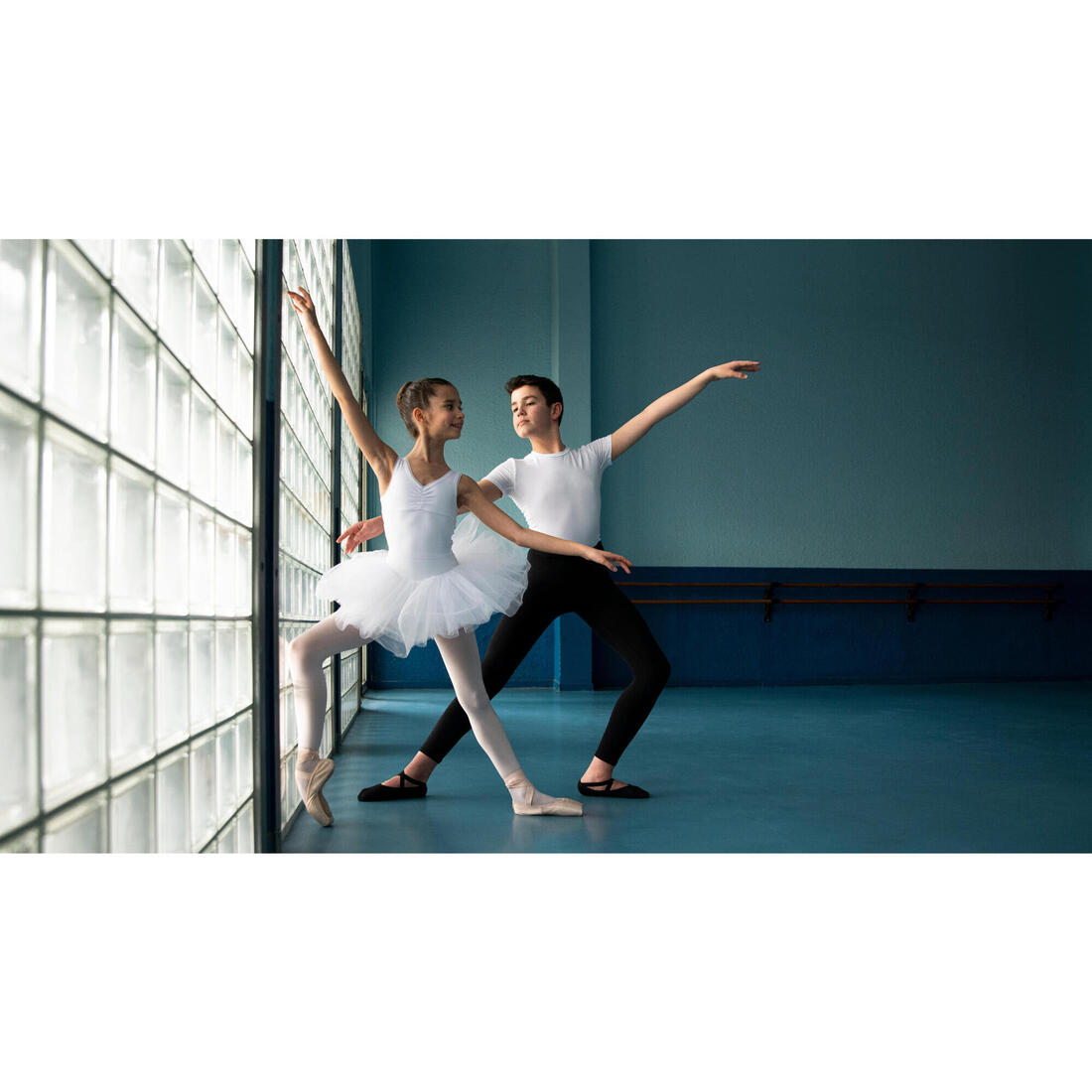
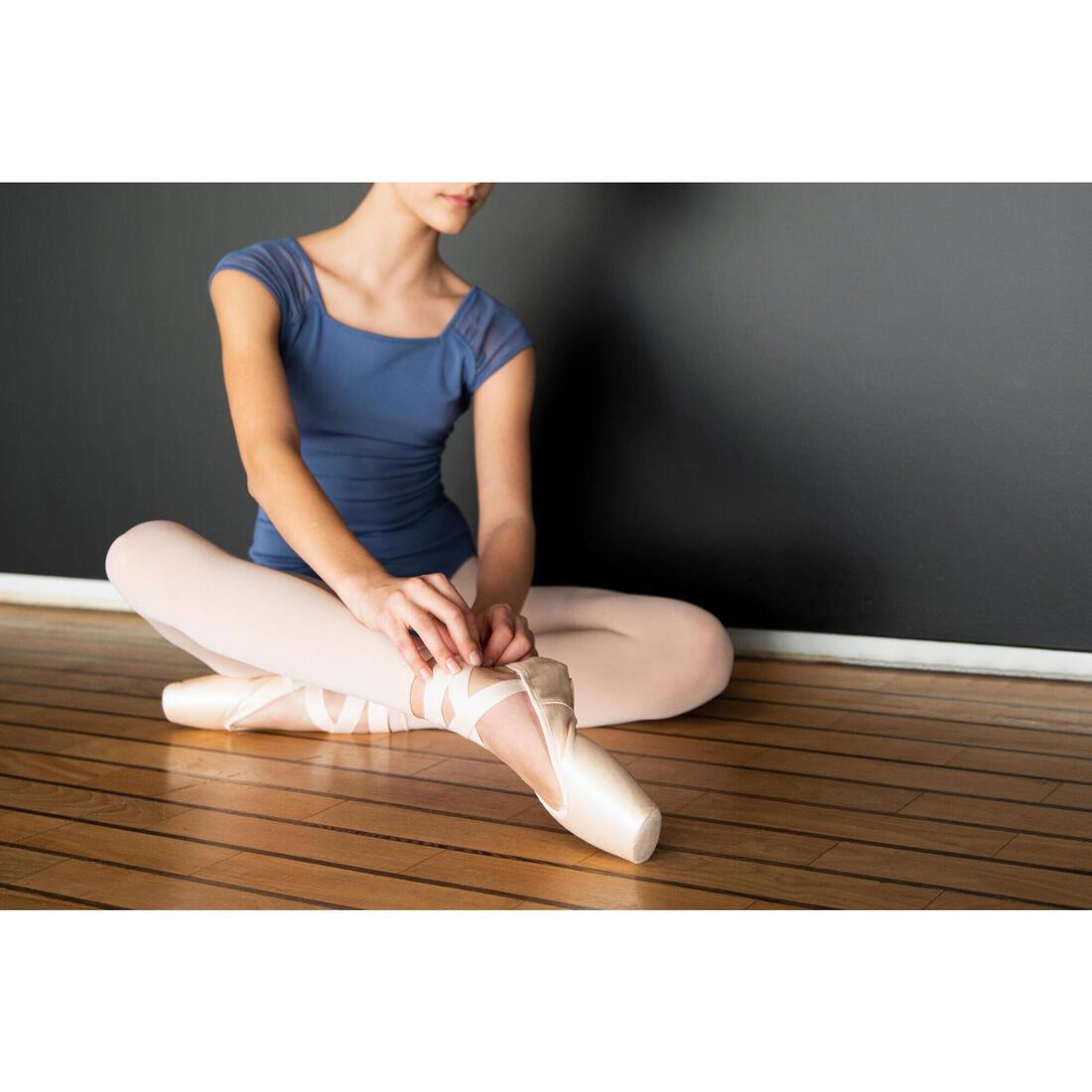
These pointe shoes are designed for beginner ballet dancers looking for stability, comfort, and flexibility. Consider sizing up!
Just learning to do relevés and échappés? These pointe shoes have a wide and stable platform for dancers with narrow feet learning to dance on pointe once you get the go ahead from your teacher.
These pointe shoes are designed for beginner ballet dancers looking for stability, comfort, and flexibility. Consider sizing up!
Just learning to do relevés and échappés? These pointe shoes have a wide and stable platform for dancers with narrow feet learning to dance on pointe once you get the go ahead from your teacher.
These pointe shoes are designed for beginner ballet dancers looking for stability, comfort, and flexibility. Consider sizing up!
Please note that your ankles must be strong enough to wear pointes. Wearing pointe shoes and dancing on pointe should be discussed first with your teacher.
We work with a Tunisian factory that is specialised in making pointe shoes using a traditional method. This traditional technique consists in stitching the sole of the pointe shoes on the wrong side before turning them for greater comfort and flexibility. This lets the sole move with your feet as you dance on pointe. Each pair of pointe shoes sold in our stores and on our website is hand-stitched by specialists.
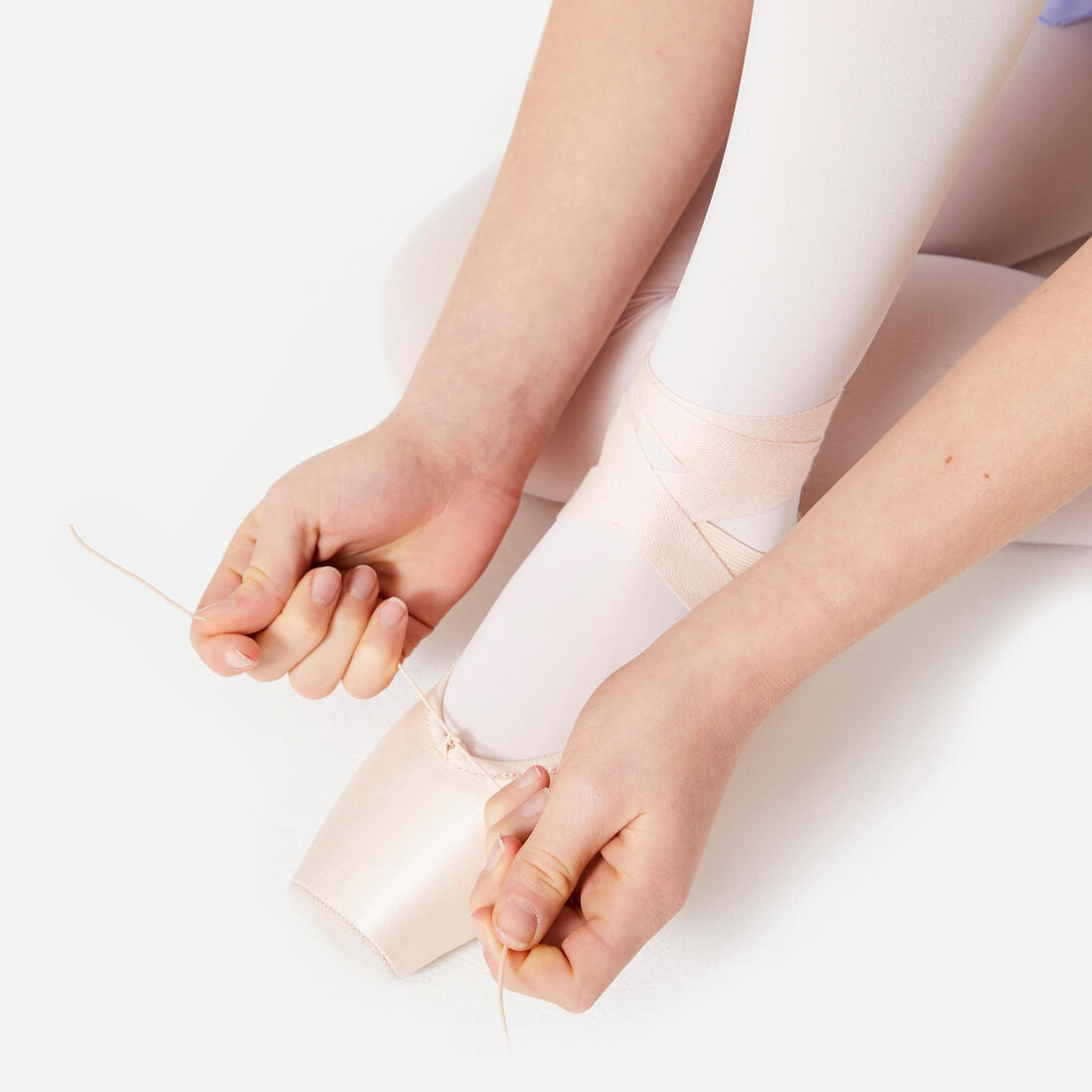
1) Sit down and slip on the pointes, then tie the ribbons around your ankle. The elastic will be stitched on to fit your ankle and instep. 2) Stand up, then put one foot on pointe, then the second foot, to assess the rigidity of the sole compared to your ankle strength.
The rigidity of soles should be suited to the strength of your ankles. The sole should be: Neither too supple: when on point, your feet should not go too far forward, Nor too rigid: when you are on pointe and the sole does not stay in contact with your instep, you won't be able to correctly bend your foot, and so won't be able to dance on pointe.
When you choose your shoes, the important thing is for your toes to be supported but not squashed! Your toes should be comfortable in the slipper and not feel stiff. However, you should feel supported. If you plan to wear silicone/foam/cotton pads inside your shoes for comfort, we recommend sizing up one size.
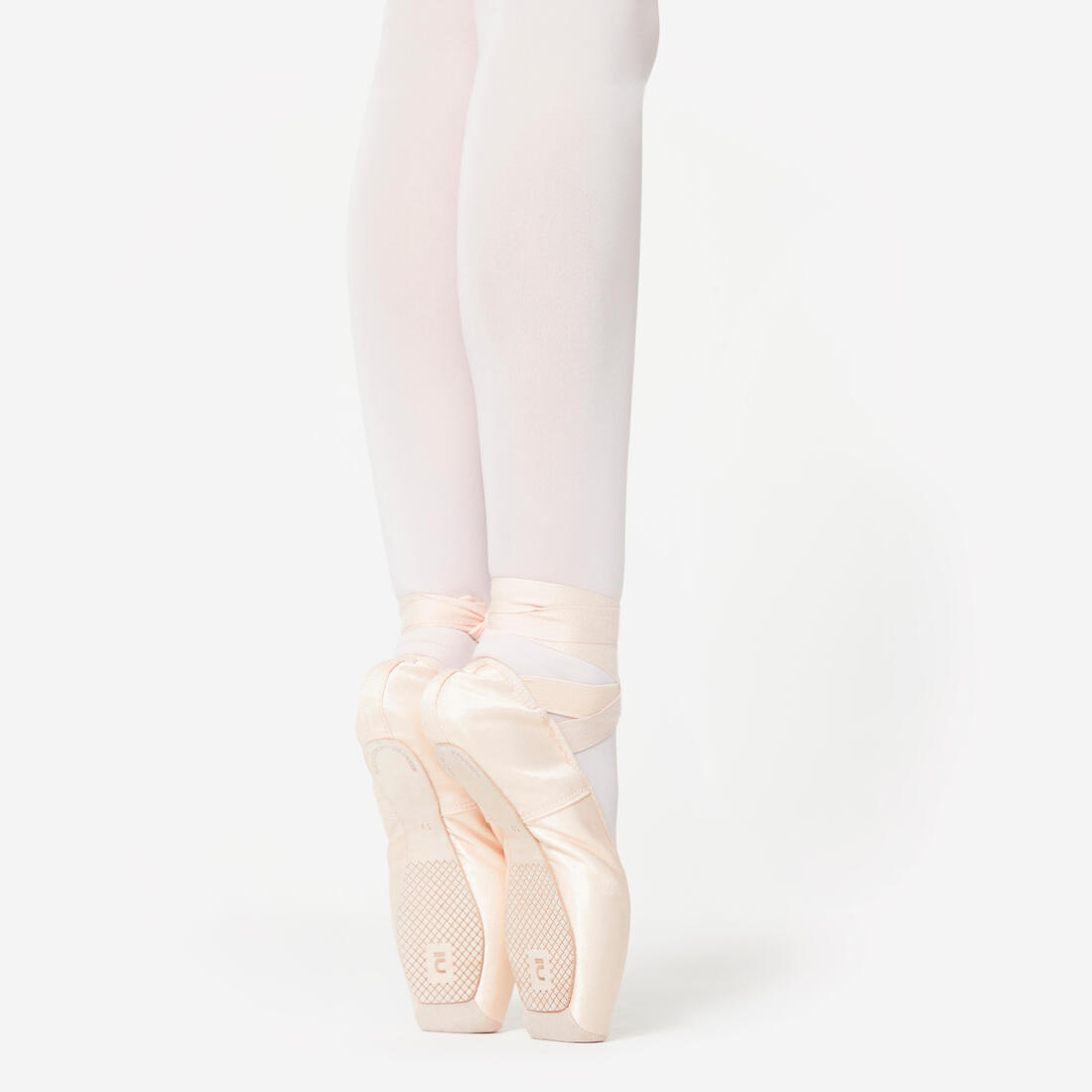
A removable gel pad has been added at the bottom of the shoe for added comfort.This gel pad comes in a little bag inside the pointes, and separates into two parts for you to push into the toe of each shoe.
If your dance teacher does not feel you are ready to dance on pointe, you can exchange your shoes or get a refund in stores or online.
Just learning to do relevés and échappés? These pointe shoes have a wide and stable platform for dancers with narrow feet learning to dance on pointe once you get the go ahead from your teacher.
Pre-sewn elastics and ribbons on the shoes.
Wide platform suitable for beginners.
The supple shank (sole) helps you transition from demi-pointes to pointes.
These pointe shoes are designed for beginner ballet dancers looking for stability, comfort, and flexibility. Consider sizing up!
These pointe shoes are designed for beginner ballet dancers looking for stability, comfort, and flexibility. Consider sizing up!
Please note that your ankles must be strong enough to wear pointes. Wearing pointe shoes and dancing on pointe should be discussed first with your teacher.
We work with a Tunisian factory that is specialised in making pointe shoes using a traditional method. This traditional technique consists in stitching the sole of the pointe shoes on the wrong side before turning them for greater comfort and flexibility. This lets the sole move with your feet as you dance on pointe. Each pair of pointe shoes sold in our stores and on our website is hand-stitched by specialists.
1) Sit down and slip on the pointes, then tie the ribbons around your ankle. The elastic will be stitched on to fit your ankle and instep. 2) Stand up, then put one foot on pointe, then the second foot, to assess the rigidity of the sole compared to your ankle strength.
The rigidity of soles should be suited to the strength of your ankles. The sole should be: Neither too supple: when on point, your feet should not go too far forward, Nor too rigid: when you are on pointe and the sole does not stay in contact with your instep, you won't be able to correctly bend your foot, and so won't be able to dance on pointe.
When you choose your shoes, the important thing is for your toes to be supported but not squashed! Your toes should be comfortable in the slipper and not feel stiff. However, you should feel supported. If you plan to wear silicone/foam/cotton pads inside your shoes for comfort, we recommend sizing up one size.
A removable gel pad has been added at the bottom of the shoe for added comfort.This gel pad comes in a little bag inside the pointes, and separates into two parts for you to push into the toe of each shoe.
If your dance teacher does not feel you are ready to dance on pointe, you can exchange your shoes or get a refund in stores or online.
Just learning to do relevés and échappés? These pointe shoes have a wide and stable platform for dancers with narrow feet learning to dance on pointe once you get the go ahead from your teacher.
Pre-sewn elastics and ribbons on the shoes.
Wide platform suitable for beginners.
The supple shank (sole) helps you transition from demi-pointes to pointes.
These pointe shoes are designed for beginner ballet dancers looking for stability, comfort, and flexibility. Consider sizing up!
0 reviews
0 reviews
Member card
Please log in to view your member card.
Member card
Please log in to view your member card.

Reviews